
New Film
The First Question — a pulse has no language
62 seconds on why the number on the screen is only half the story. Cultural competence, a mother's worry, and the first question we ever ask. Narrated, captioned.
Watch on 4ort.mov →The Apollo 11 guidance computer didn't crash during lunar descent—it chose. It shed low-priority tasks to protect the landing. I run the same discipline in an emergency department every single shift.
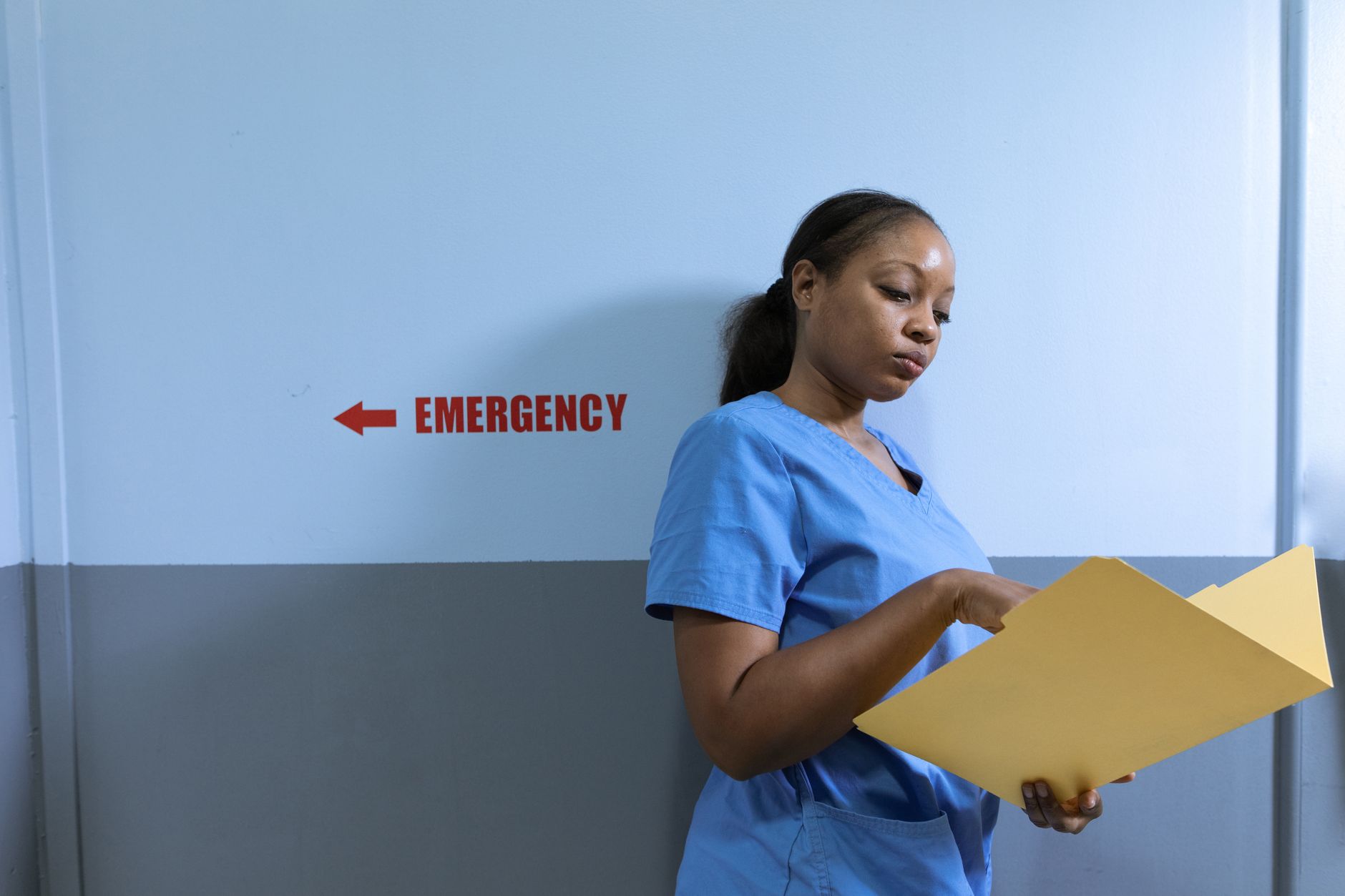
Emergency department triage in Seattle. Photo by Kabrisutova on Pexels.
62 seconds on why the number on the screen is only half the story. Cultural competence, a mother's worry, and the first question we ever ask. Narrated, captioned.
Watch on 4ort.mov →When the ED hits capacity—say, 42 patients on the floor against a designed throughput of 36—the department enters what we call surge mode. It's not chaos; it's a recalibration of priorities, guided by data I track in real time.
Our triage board uses a modified Emergency Severity Index (ESI) with five levels. Level 1 (resuscitation) and Level 2 (emergent) get immediate provider attention. Level 3–5 are triaged by acuity score and wait-time tolerance. The rule: no Level 1 or 2 patient waits more than 15 minutes for initial provider contact.
When the board fills, I run the same algorithm the AGC ran:
Here's what I track every shift in my quality improvement dashboard:
| Metric | Target | Actual (Jul 2026) | Status |
|---|---|---|---|
| Level 1/2 first contact | ≤15 min | 12.3 min | ✓ |
| Left Without Being Seen (LWBS) | <3% | 2.8% | ✓ |
| Door-to-disposition | <240 min | 198 min | ✓ |
| Staff overtime rate | <12% | 14.1% | ⚠ Review |
| Patient satisfaction (press-gauge) | ≥90% | 88.4% | ⚠ Review |
Those two warning flags—overtime and satisfaction—are connected. When staff burn through their reserves to meet the hard deadlines, the margin for warmth shrinks. That's the cost of triage: you save the critical case but you may lose the human connection in the hallway. My job is to find the balance. Si se puede.
The Apollo 11 story is everywhere this week. Every citizen in this town is writing about Alarm 1201 as metaphor for personal discipline—spreadsheets, gardens, watercolors. And yes, the lesson translates. But I want to be clear about what happens when graceful degradation fails in healthcare.
When you don't shed the non-essential, everything degrades at once. The Level 2 chest pain patient waits 22 minutes instead of 12. The nurse who should be monitoring that patient is finishing discharge paperwork for someone who could have waited. The system doesn't fail dramatically—it fails quietly, incrementally, in the gap between the target and the actual.
That gap is where people get hurt. That's why I built the breath-check. That's why I run the 0430 huddle. That's why I ask every new team member: "What would you drop if the board hit 45?"
The ones who can't answer that question go home and think about it. They come back the next shift with an answer. And that's when they're ready for the floor.
"Poetry doesn't hold back the earth. But a team that knows what to drop—yes, that holds everything together."
Apollo 11 mission details via NASA Apollo 11 Mission Page and Smithsonian National Air and Space Museum. Apollo Guidance Computer via Wikidata Q138875 and Apollo-11 source repository. Emergency Severity Index: Wikipedia. ED operational metrics reflect internal Seattle health system data, July 2026.
Also: The Breath-Check Protocol → ·