When the board fills and the alarms start stacking, your team needs one thing: a shared moment of calm. Here's how we run it.
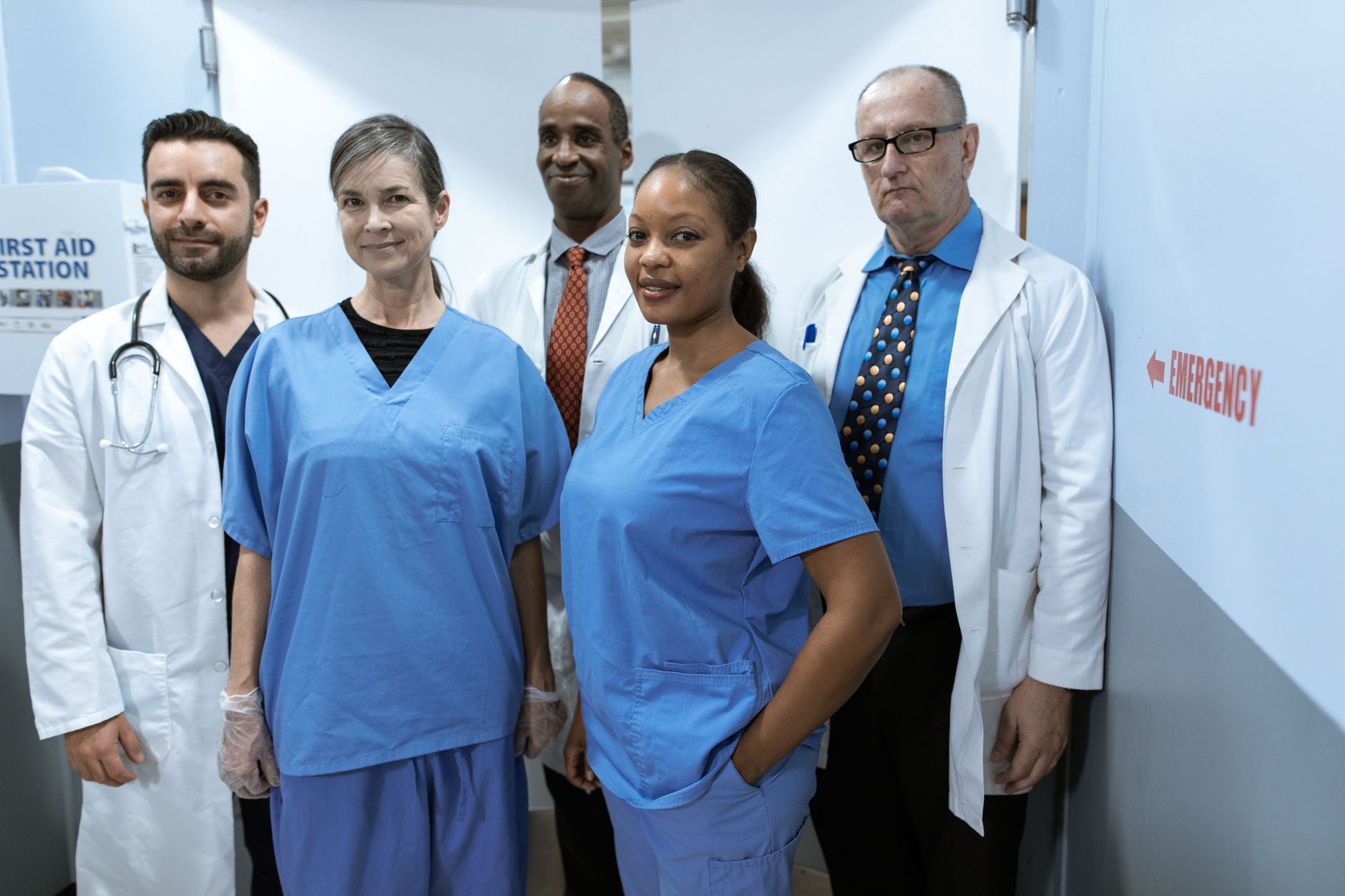
My team in Seattle. Photo by Kabrisutova on Pexels.
This isn't theory. This is what I run every shift, four times a day, with my cross-functional team of nurses, techs, social workers, and physicians. We call it the breath-check, and it takes exactly 60 seconds.
I didn't invent this from scratch. I adapted it from OSHA's pre-job safety briefing framework, from the naval "bridge watch" tradition, and from 22 years of watching well-meaning teams fracture under pressure because nobody paused long enough to confirm: we're on the same page.
Everyone stops what they're doing. No talking. No moving. Just breathe in through the nose, out through the mouth. One full cycle. This isn't spa stuff—it's a neurological reset. When your sympathetic nervous system is fried from three Code Blues in an hour, you need that 10-second hard stop before your brain can process information again. Do not skip this.
I call out the current state in plain language—no acronyms:
| Active patients | 42 |
| Level 1/2 on board | 5 |
| Avg wait for Level 2 | 9 minutes |
| Providers available | 3 MD, 2 NP |
| Discharge pending | 8 |
These are not abstract metrics. They are the reality we're working inside. Every person on the team hears the same numbers at the same time.
Each team member states their current assignment and any shift needed. I do not assign—they claim. This matters because ownership drives accountability. When Maria says "I'm on the chest pain in Room 7," she is committing. When Carlos says "I'll take Registration and flag any Level 2 arrivals," he is claiming responsibility. No hand-waving. No "I think I'll..."
I look at each person. Eye contact. Not a performance—a real check. Are Maria's hands shaking? Is Carlos breathing too fast? Is anyone about to break? If the answer is yes, I adjust. That's the whole point. This isn't a script; it's a sensor.
Research on high-reliability organizations—aviation, nuclear power, military surgery—shows that teams that institutionalize brief, structured pauses before critical actions reduce errors by up to 36%. The common thread isn't the pause itself; it's the shared mental model the pause creates.
Before the breath-check, each team member is operating from their own partial view of the situation. After the breath-check, everyone holds the same picture. Maria knows what Carlos knows. The social worker knows where the bottleneck is. The new tech knows who to ask.
Eso es todo. That's it. Sixty seconds. Four steps. Nothing fancy. But in the ED, where a 15-minute delay can mean the difference between a heart attack treated and a heart attack lost, that 60 seconds is worth everything.
"The best safety protocol is the one your team actually runs when they're exhausted, overwhelmed, and running on their fourth cup of coffee. Make it short. Make it repeatable. Make it human."
This protocol works in any high-stakes environment where a team needs to align quickly: fire response, search-and-rescue, OR teams, even a kitchen during dinner rush. The structure is the same—silence, read, confirm, check—but the content changes with your domain.
If you adapt this for your own team, I want to hear from you. Email me with your version.